
How Sheet Metal Parts Are Manufactured for OEMs
See how sheet metal parts are manufactured from raw material through precision cutting, forming, welding, finishing, assembly, and final inspection.


Three Major Stages of How Sheet Metal Parts Are Manufactured
Every operation should anticipate what comes next—from material selection to the way the component fits the OEM’s final assembly.
 01
Review the Drawing, Material, and Application
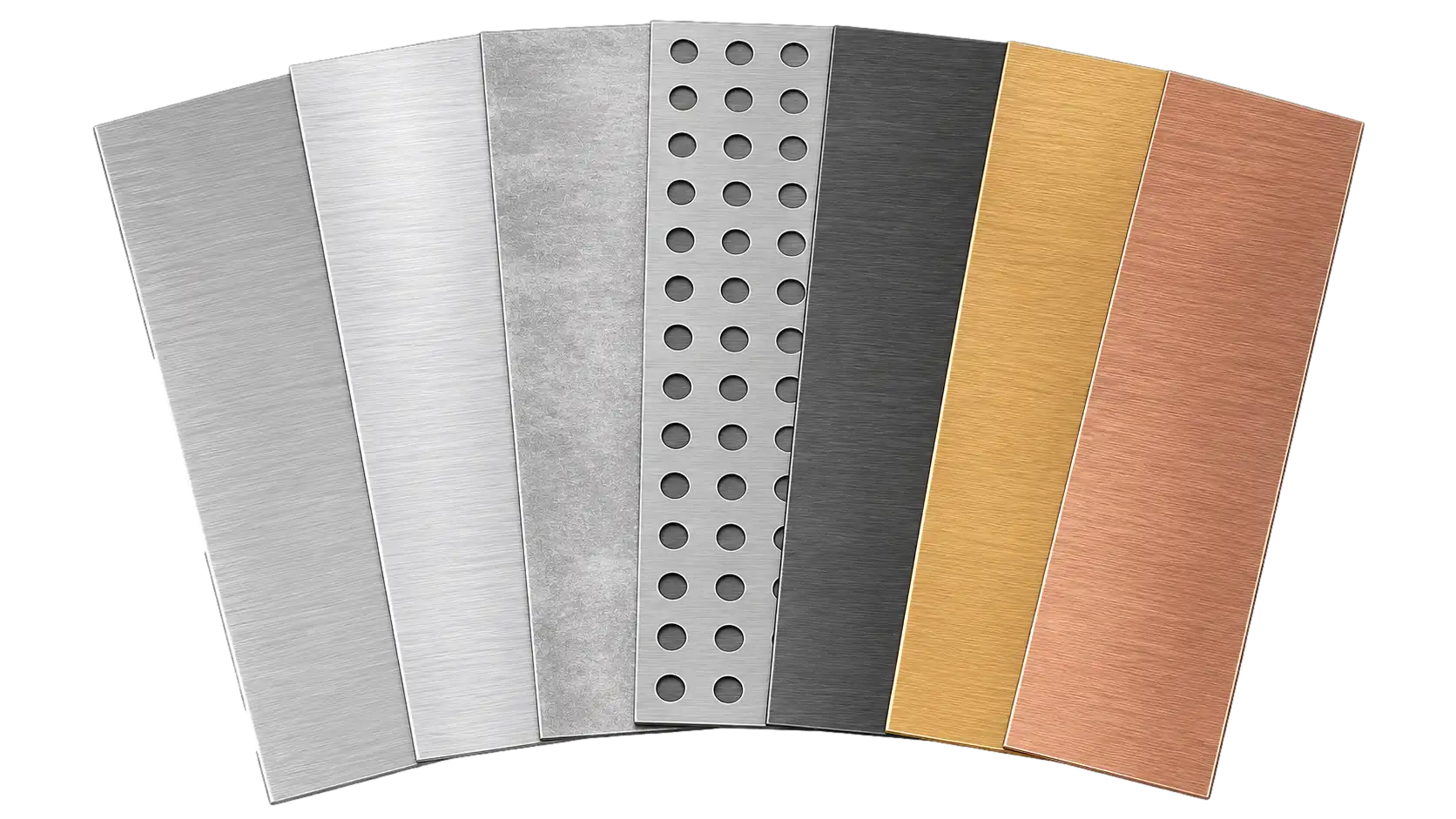
Before cutting begins, the team reviews the print, alloy, thickness, tolerances, finish, quantity, and end use. These decisions help identify the most effective fabrication route and prevent downstream fit problems.
- Material and thickness
- Bend requirements
- Hole and slot locations
- Flatness and tolerances
- Cosmetic requirements
- Quantity and end use
 02
Cut, Punch, and Add Functional Features
The flat sheet is converted into a precise blank using laser cutting, water jet cutting, turret punching, or a combination of processes. Mounting holes, access openings, ventilation, slots, tabs, and hardware locations must align with connected components.
- Outside profiles
- Mounting holes
- Switch cutouts
- Ventilation patterns
- Cable pass-throughs
- Tabs and knockouts
 03
Form, Weld, Finish, and Assemble
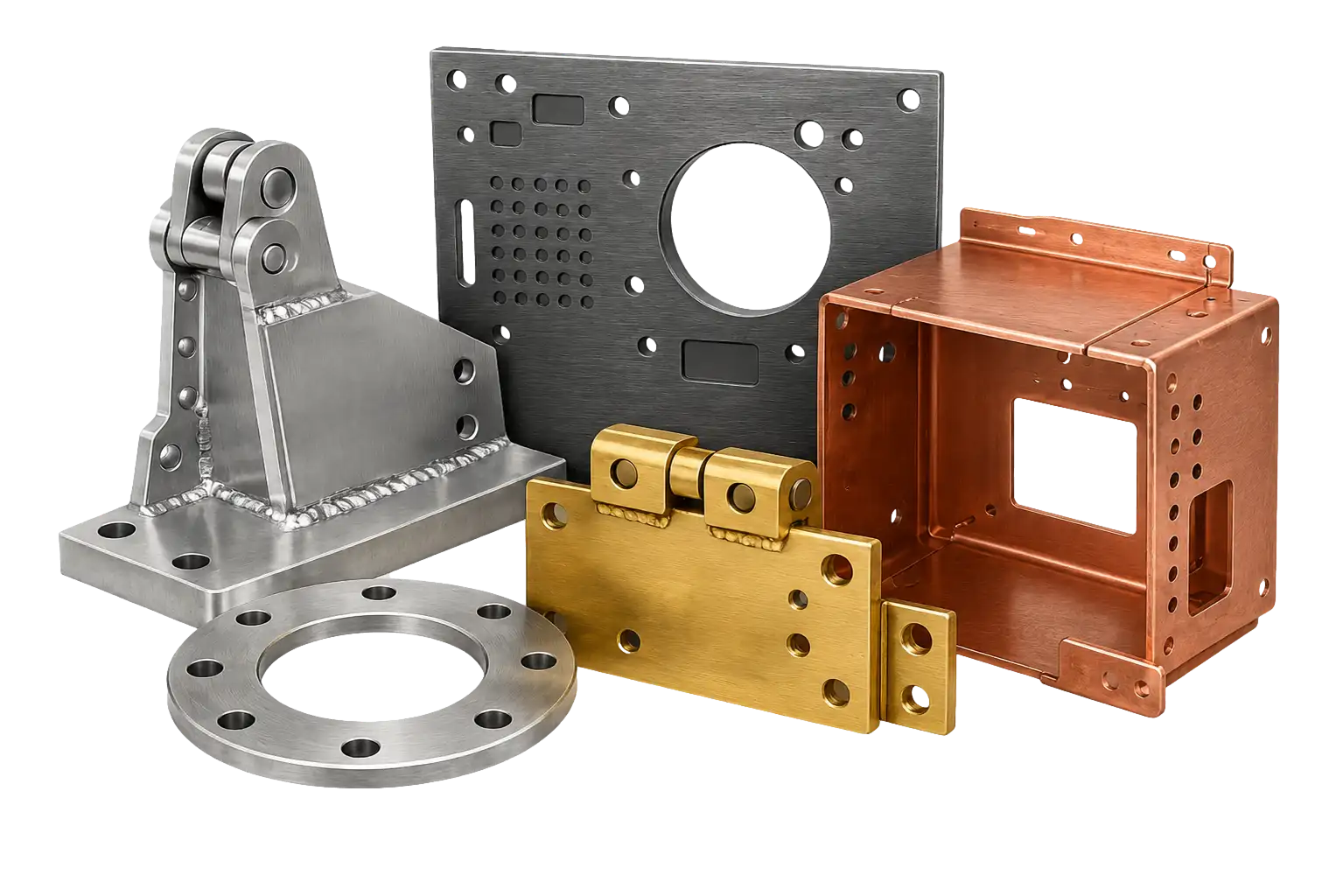
Controlled bends turn the blank into a three-dimensional component. Depending on the design, multiple pieces can then be welded, fitted with hardware, finished, and combined into a subassembly ready for the OEM’s production line.
- Bends and flanges
- Welded structures
- Hardware integration
- Doors and hinges
- Surface finishing
- Final assembly
How Sheet Metal Parts Are Cut to Shape
The best process depends on the alloy, thickness, geometry, tolerance, feature type, and production quantity.

Laser Cutting
Clean profiles, detailed geometry, and repeatable blanks for brackets, panels, covers, guards, and enclosure components.
Explore laser cutting
Water Jet Cutting
A no-heat cutting option suited to specialty materials, thicker components, prototypes, and profiles where heat distortion is a concern.
Explore water jet cutting
Turret Punching
Efficient creation of repeated holes, slots, perforations, knockouts, and formed features for panels and production parts.
Explore turret punching


What Must Be Controlled Along the Way?
Open each item to see why the details matter to downstream operations and final assembly.
Feature Location and Alignment
Mounting holes, slots, cable openings, and cutouts must line up with mating parts. A misplaced pattern can slow assembly or require rework.
Bend Radius and Allowance
Material thickness, grain direction, bend radius, and allowance affect final dimensions. Features too close to a bend can distort.
Forming and Final Geometry
Forming and bending create flanges, channels, trays, covers, housings, and mounting surfaces while adding rigidity.
Weld Fit-Up and Heat Control
Joint design, material, heat input, and part fit-up all influence strength, distortion, appearance, and dimensional consistency.
Hardware and Assembly Planning
Inserts, fasteners, hinges, and connected pieces should be considered early so the fabricated component arrives ready for the next production stage.
Have a Drawing or Sheet Metal Project?
Let Advantech help identify a practical manufacturing path for the part and its final application.
Forming, Welding, Finishing, and Assembly
A flat blank becomes a useful three-dimensional component through carefully planned bends. Welding can then join multiple pieces into frames, guards, housings, cabinets, and structural subassemblies.
Through contract assembly, components can also receive installed hardware, inserts, hinges, fasteners, or other elements needed for the next stage of OEM production.


Inspection Protects the Larger Production Schedule
Before delivery, the part or assembly is reviewed against the drawing and project requirements. One incorrect panel, bracket, enclosure, or assembly can delay final product assembly, testing, shipping, or installation.
A documented quality management system—such as the framework described by ISO 9001 quality management requirements—supports consistent processes and continual improvement.

Parts Manufactured From Sheet Metal
The same connected process can support simple components, complex fabrications, and production-ready subassemblies.
 Electrical & Antenna Components
 Enclosures, Doors & Hinges
Panels, Covers & Mounting Plates
Welded Frames & Subassemblies
Every Operation Affects the Next
A flat part may look simple on paper, but once it is cut, bent, welded, and installed into a larger product, every detail matters.
OEMs benefit from a supplier that understands how these stages connect. Explore Advantech’s integrated manufacturing capabilities through its manufacturing departments.
Turn Your Drawing Into a Dependable Finished Part or Assembly
From laser-cut blanks and formed brackets to welded housings and complete assemblies, build a manufacturing path around your part, application, and production requirements.
Request Your Custom Quote